
A Difficult Endeavour I
Beautiful weather never looked so bad.

Endeavour bathed in xenon lights, the night before the first launch attempt.
The skies are clear, the capricious winds are calm, ocean waves lap gently at the beach. The madding crowds have departed, an estimated 750,000 had descended on Cocoa Beach and Titusville to see one last launch. Gone are the lightning storms and wildfires of the last few days, remnants of the extreme weather that ravaged swaths of the United States. Flying conditions are perfect, but space shuttle Endeavour, awaiting her 25th and final launch as STS-134, sits grounded at Launch Complex 39A. Hydraulic heater lines have failed, pointing to possible larger issues, so launch has been scrubbed for over two weeks. The graceful lines of her delta wings stare purposefully skyward, but pyrotechnic bolts leash her firmly to terra firma.
All in a days work in the complex business of space travel, but utter hell to the throngs of media who have assembled to bear witness to the penultimate flight of the space shuttle program. Many have travelled far to report on a shuttle launch close up, but a week’s worth of delay (or two) wreaks havoc with airline schedules. I drove over 2000 kilometres from Toronto to the Kennedy Space Centrer, only to find myself faced with the dilemma that so many now face: pack up and go home, or wait it out?
An incomparable experience.
A space shuttle launch, of which now only two remain, is an incomparable experience. The entirety of the US manned space program, the efforts of billions of dollars and thousands of people, focuses on one single moment. Like the Olympics, people have worked and trained for years for their few seconds of glory. In the case of the space shuttle ascent to orbit takes about eight minutes, but to the unaided eye it’s all over in about sixty seconds. From the VIP viewing sites the ground shakes, the air roars, and on columns of fire as bright as the sun the shuttle rises into the air, accelerating at a rate that would make any Ferrari blush. At launch a shuttle consumes over 20,000 lbs of fuel every second, in a finely tuned and orchestrated ballet of engineering that has no equal. It’s truly awe inspiring, and even the best photography or video doesn’t do it justice.
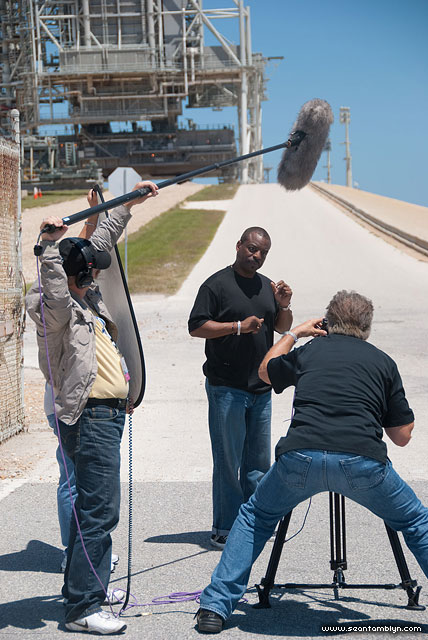
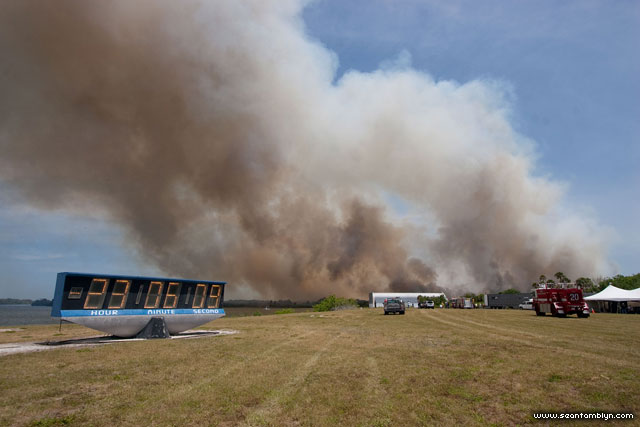
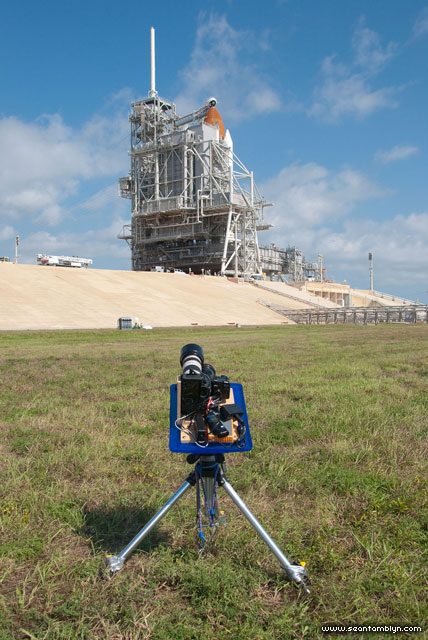
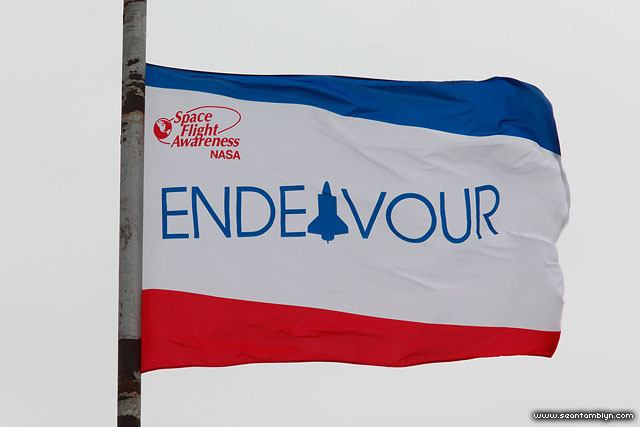
From left to right: LeVar Burton, Geordi La Forge of Star Trek: The Next Generation fame, works the cameras at the base of the launch pad, wildfires burn near the press site at Kennedy Space Centre, a carefully placed remote camera stares up at the launch pad before its protective enclosure is put in place, and Endeavour’s flag flies proudly above the launch pad.
So here I am waiting it out, a photographer trying to document the final launches of a program that helped shape my childhood. Didn’t everybody have copies of Space Technology and The Space Shuttle Operators Manual on their bookshelves next to Where The Wild Things Are and Charlie And The Chocolate Factory?
US President Barack Obama was here, so too was Robot Chicken creator Seth Green. About as unlikely a contrast as you’re likely to encounter, but there you have it. People have lived for three decades with the space shuttle program, arguably so successful that it became routine. But now it’s over, and there’s nothing to replace it. So people are coming out in droves once again to view the spectacle of humans riding fire.
For us long-distance photographers, the pain of the delay is doubled. Months of thinking and planning camera angles and framing, thousands of miles of driving, 20-hour days of schlepping camera gear through swamps and security checks. Carefully crafted rigs keep cameras dry in inclement weather, special batteries keep intervalometers running, everybody has a homegrown solution to the problem of leaving a camera unattended for days around a launch. But all is for naught when a launch is scrubbed.
Slumming it in Cocoa Beach
Launch scrubs generally require one thing: time, and lots of it. Before any work can be done on an orbiter at the pad, the vehicle has to be ‘safed’, and the massive External Tank (ET) has to be drained of all volatile gases and purged with inert nitrogen. In Endeavour’s case, Aft Load Control Assembly 2 (ALCA-2) was deemed to be the cause of the problem. Like a glorified fuse box, an element that feeds power to heaters for hydraulic system fuel lines had burnt out. ALCA-2 had to be removed, the cause of the short circuit tracked down, a replacement box put back in, and all of the systems downstream of that box had to be retested.
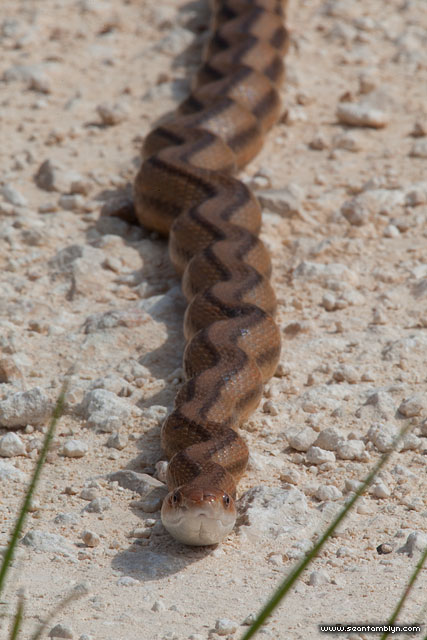
So, with remote cameras pulled from the field and the next launch attempt still days away, there’s not much to do except explore. Kennedy Space Center is surrounded by parks and wildlife refuges, a seemingly inexhaustible supply of places to visit. The Merritt Island and Archie Carr National Wildlife Refuges are big draws for tourists and photographers alike:
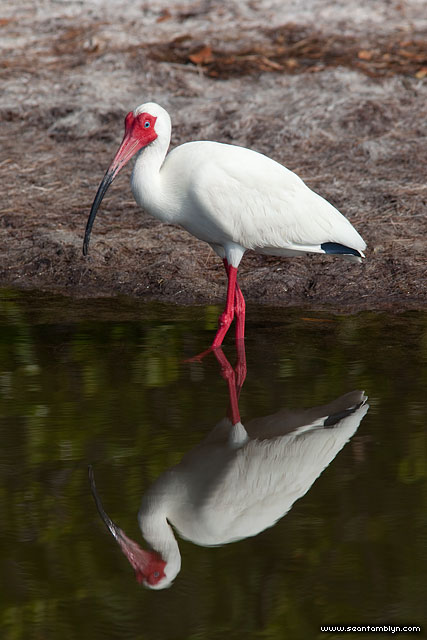
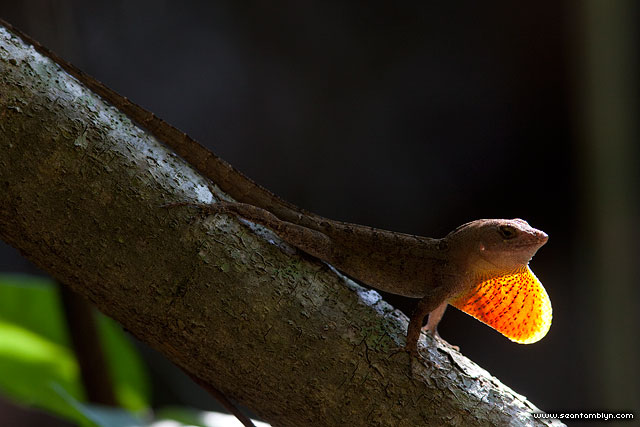
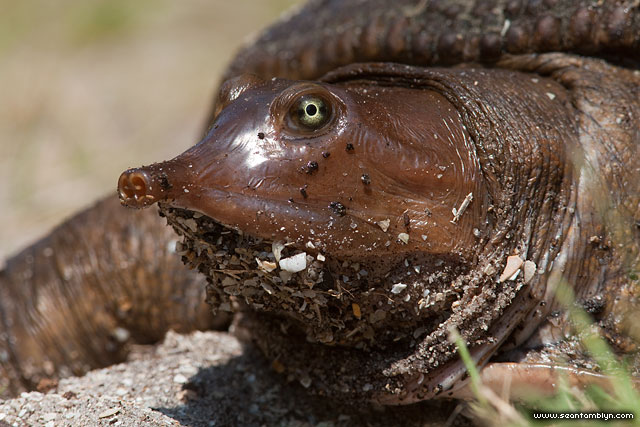
Above, left to right: an American white ibis wades in the waters of Merritt Island, a brown anole and a softshell turtle on the Maritime Hammock trail of the Archie Carr refuge.
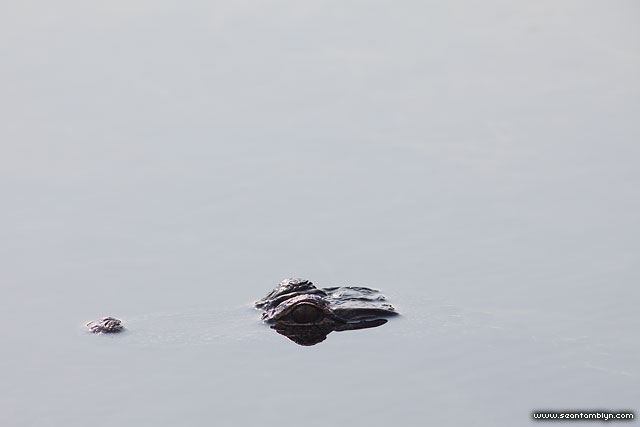
Below, left to right: a 2-metre long rat snake basks in the sun on Merritt Island, a dragonfly and submerged American alligator in the Archie Carr refuge.

Still, the area’s primary industries are military and space-related. The Kennedy Space Center headlines the bill of course, but Cape Canaveral Air Force Station and Patrick Air Force Base are massive, and military overflights are common. A wonderful place to view this strange confluence of military, space, and nature is Jetty Park. Dolphins, sea turtles, and pelicans mix it up with beachgoers, nuclear submarines, and rocket launches. Located at the north end of the city of Cape Canaveral, just south of the space centre, it’s one of the closest places that the public can view launches from. There’s a lot more than just wildlife in the Cocoa Beach area:
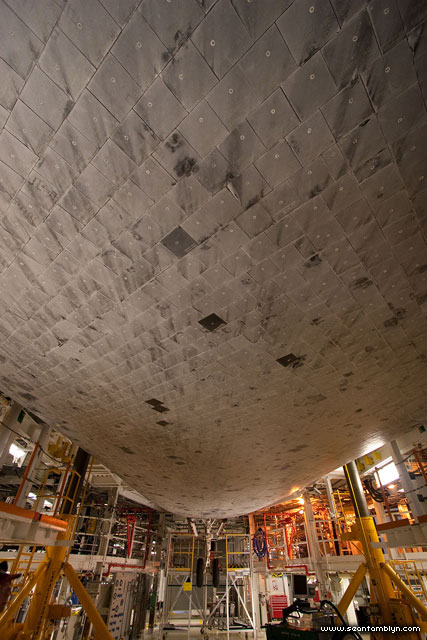
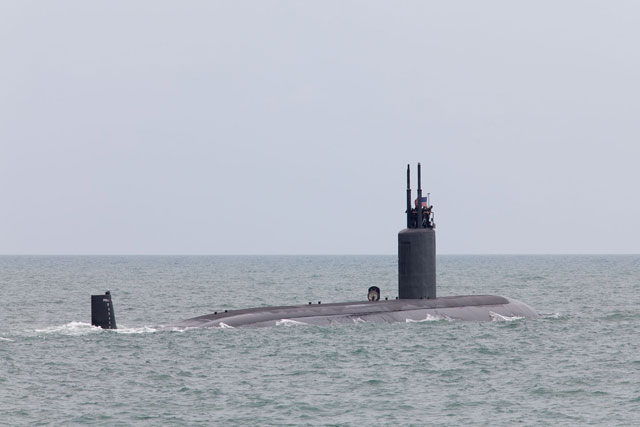
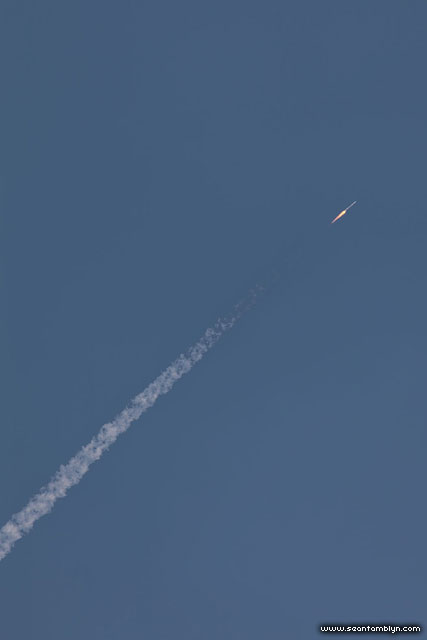
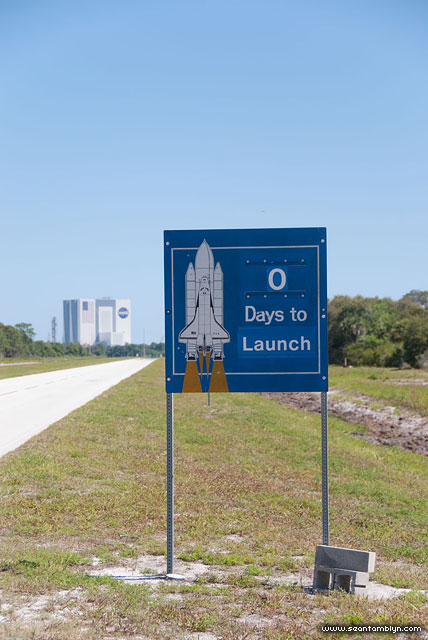
Above, left to right: underneath space shuttle Discovery in the Orbiter Processing Facility (OPF), a nuclear attack submarine heads to sea and an Atlas V launch as seen from Jetty Park, and a tour of the Kennedy Space Centre reveals a launch countdown sign with the Vehicle Assembly Building (VAB) in the background.
For now, NASA has rescheduled Endeavour’s final launch for May 16th. The crew (commanded by Mark Kelly, husband of wounded congresswoman Gabrielle Giffords) arrive back at the Cape in their T-38s on May 12th, and soon the launch countdown will begin anew. Remote cameras will once again be security checked and painstakingly set up around the launch pad, and the ET will be fueled for launch. Long-range forecasts show lines of thunderstorms descending on the Cape, but launch is still over five days away. It would be easy to throw in the towel, to succumb to the idea that launch within a reasonable timeframe is an impossibility and pack up and head home. After all, the previous launch — space shuttle Discovery, STS-133 — was delayed by over three months because of various leaks and major problems with the ET. But if there was one thing that characterized NASA’s early space programs, it was hope: charting courses into the unknown held no guarantees. Yet, somehow, it always worked out. If Endeavour can channel just a little bit of that early bravado, she just might be ‘go’ for her final launch on the 16th.
Godspeed, Endeavour.
All photographs by Sean Tamblyn. Sources: NASA, Wikipedia, Brevard County Environmentally Endangered Lands (EEL) Program, Spaceflight Now, NASASpaceFlight.com.
Leave a Reply